First,
The realization.
As a self-proclaimed computer boy I have always been interested in technology. I remember the first time I could carry a computer in my pocket with the iPod Touch, and how magical that felt. I would daydream about the things I could do with it even before there was an official app store. Innovation and new developments in the tech sphere should, by nature, always feel this way. Technology should always be a key that opens the door and broadens the range of human creativity.
But for years, it wasn't.
Every new innovation — the cloud, voice assistants, AI, smart anything — came with the same deal underneath: you don't own the data, you don't own the account, you rent access on someone else's terms, and get spied on for your trouble. The features got better and the trade got worse, and after enough years of that I started seeing every announcement the same way. I could only see the potential downsides, and it was never exciting the way that first iPod was. "We can identify your friends in photos automatically!" was the exact stuff of my childhood day dreams, but now that it was here it felt more like a nightmare. "Innovation" had become synonymous with (personal) invasion.
If you are not paying for it, you're not the customer; you're the product being sold.
Because of this mentality I opted out of almost everything. No cloud photos. No smart speakers. No AI. My backup strategy was a folder of files I pulled off my phone every few months and hoped for the best. As someone who had always loved adopting and tinkering with new technology I found myself using less and less. I had integrated less technology into my daily life than the average Facebook Granny asking Alexa to set a 15 minute timer.
Then one day, and I can't even remember what inspired it, I did an online search for "Private Google Photos Alternative" and it all started to change.
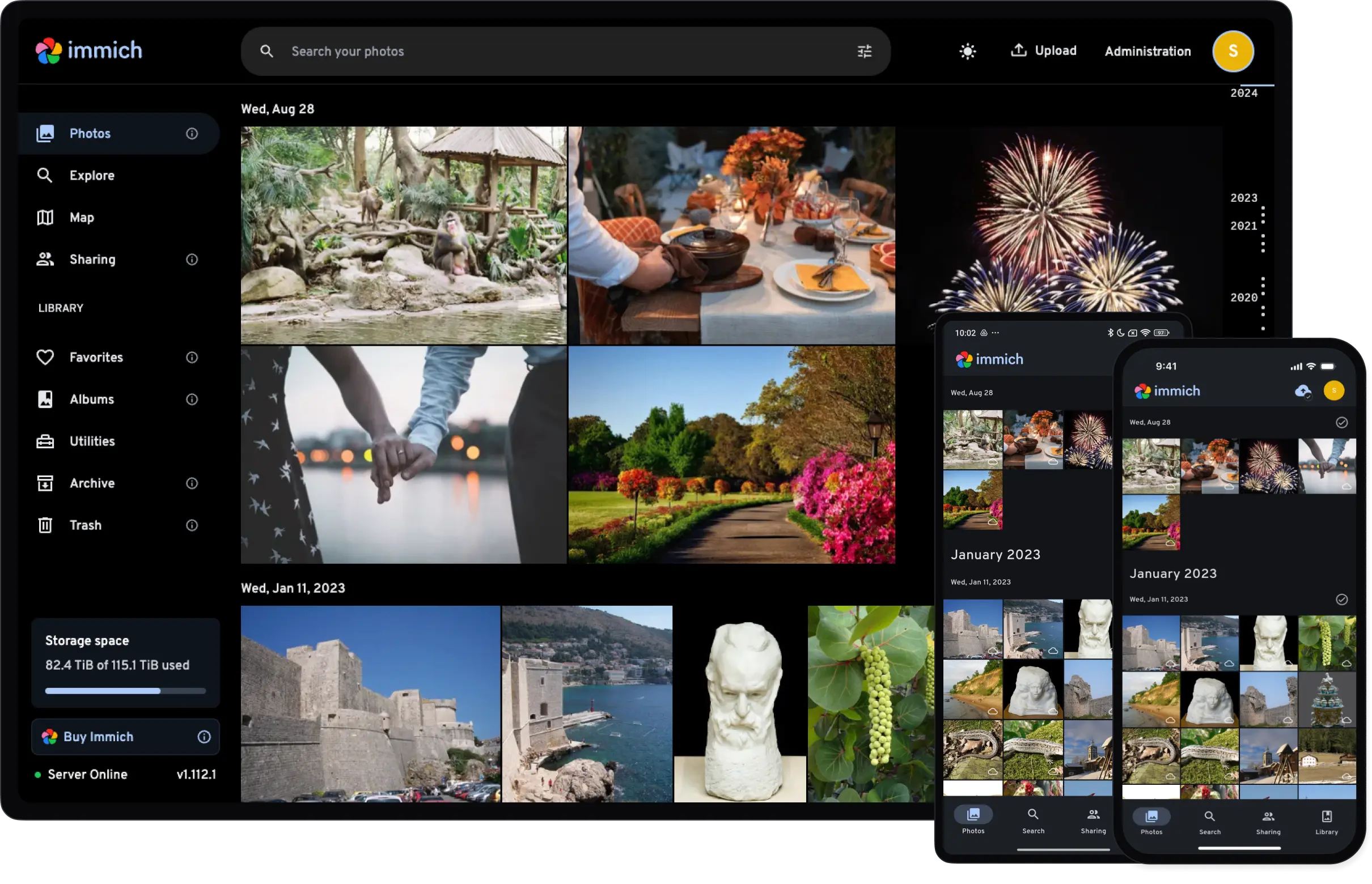
Because none of these new innovations are inherently a violation of your privacy or dystopian. Cloud storage that syncs your photos to every device is incredible. AI that picks faces out of a decade of pictures, or surfaces the one beach photo from 2017 when I type "beach", is genuinely magic. Voice control. Shared albums. Search across years of files. The features were never the problem, the ownership was, and giving up ownership was never actually required. Run the same software on hardware you own, on data you control, in a closet you can walk to, and everything changes. The AI rules are tweakable and transparent. The cloud is yours. The features that used to feel like traps are actually cool and useful time savers. The simple thought, the possibility, of these technologies existing but not as a part of Privacy Invasion Suite 2000 ™ re-sparked the excitement I had lost.
The technology was always fun, the magic was always there. Profiteering and exploitation had just been masking it.